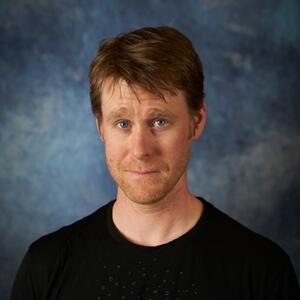

Eric Hedge, PhD

Eric Hedge, PhD

Eric Hedge

Assistant Professor


Training

BSc – Kinesiology (University of Western Ontario)

MSc – Kinesiology (University of Waterloo)

PhD – Kinesiology (University of Waterloo)

Post-Doctoral Fellowship – Internal Medicine (Institute for Exercise and Environmental Medicine & University of Texas Southwestern Medical Center) 

Undergraduate Courses

KNPE 227 – Exercise Physiology

Research Summary

The goal of my research program is to advance our understanding of the integrative physiological mechanisms governing cerebral blood flow and cardiovascular function, with a focus on the effects of exercise and inactivity across the lifespan. My laboratory is currently focusing on 3 lines of investigation:

1) Cerebrovascular control during exercise

2) Cardiovascular consequences of spaceflight/bed rest/inactivity & countermeasures to protect cardiovascular health

3) Integrative cardiovascular responses to exercise

Graduate Student Opportunities

My laboratory is currently considering applications for MSc and PhD student positions. Prospective students are strongly encouraged to apply for scholarships and awards offered through the National Sciences and Engineering Research Council of Canada (NSERC), the Canadian Institutes of Health Research (CIHR), or Ontario Graduate Scholarship (OGS). Deadlines for these competitions generally fall in October — several months before the deadlines for our graduate programs. Only students who have already applied for funding from these external agencies will be eligible for the various internal scholarships and awards offered by Queen’s University to incoming students.

Selected Publications

  1. Hedge, E.T., Howden, E.J., Lawley, J.S., Cornwell, W.K., Haykowsky, M.J., Levine, B.D., and Sarma, S. (2026). Influence of sex and heart size on cardiovascular adaptations to 2 years of endurance exercise training in sedentary middle-aged adults. Journal of Physiology. 604: 5817-5830. DOI: 10.1113/JP290689.

  2. Hedge, E.T., Bryans, C.G., Mastrandrea, C.J., Siebenmann, C., Hargens, A.R., Karlsson, L.L., Hughson, R.L., and Linnarsson, D. (2025). Exercise during artificial gravity preserves cardiorespiratory fitness but not orthostatic tolerance following 60 days of head-down bed rest. Journal of Applied Physiology. 139(4): 943-950. DOI: 10.1152/japplphysiol.00224.2025.

  3. Hedge, E.T., Mastrandrea, C.J., Patterson, C.A., and Hughson, R.L. (2025). Sex differences between postmenopausal women and similar-age men in response to orthostatic stress following 2 wk of bed rest. Journal of Applied Physiology.138:1, 226-237. DOI: 10.1152/japplphysiol.00477.2024

  4. Hedge, E.T., and Hughson, R.L. (2025). Competing influences of arterial pressure and carbon dioxide on the dynamic cerebrovascular response to step transitions in exercise intensity. Journal of Applied Physiology. 138:3, 816-824. DOI: 10.1152/japplphysiol.00643.2024.

  5. Hedge, E.T., Robertson, A.D., and Hughson, R.L. (2025). Effects of dynamic changes in arterial pressure and carbon dioxide on middle cerebral artery blood velocity during high-intensity interval exercise. Journal of Applied Physiology. 139(5): 1175-1184. DOI: 10.1152/japplphysiol.00638.2025.

  6. Hedge, E.T., Mastrandrea, C.J., and Hughson, R.L. (2023). Loss of cardiorespiratory fitness and its recovery following two weeks of head-down bed rest and the protective effects of exercise in 55- to 65-yr-old adults. Journal of Applied Physiology. 134:4, 1022-1031. DOI: 10.1152/japplphysiol.00726.2022.

See PubMed for full list of publications (https://pubmed.ncbi.nlm.nih.gov/?term=Hedge+ET&sort=date)

Sarah Blacker, PhD

Sarah Blacker, PhD

Sarah Blacker

Adjunct Professor

PhD

Degrees:

PhD (University of Alberta)
MA (McMaster University)
BAH (University of King’s College)

Bio:

Dr. Sarah Blacker is an Adjunct Assistant Professor in the School of Kinesiology and Health Studies at Queen’s University.  She received her PhD from the University of Alberta in 2015 and held Postdoctoral Fellowships at the Max Planck Institute for the History of Science in Berlin and at the Technical University of Munich, Germany, before returning to Canada to take up a SSHRC Postdoctoral Fellowship in the Department of Anthropology at York University in 2020.  She was a Lecturer in the M.A. Program in Science and Technology Studies at the Technical University of Munich from 2018-2020.  She has taught in the Health and Society Program at York University since 2021.
 
Dr. Blacker’s research and teaching are centered around racial health inequities, environmental health, and data justice.  Her research addresses racial health inequities through two current projects: 1) research on environmental health inequities and community-led environmental monitoring projects practicing data sovereignty in contexts of environmental contamination and climate change; and 2) research on the collection and uses of race-based health data with a focus on the uses of this data in the development of medical AI tools.  This research examines initiatives underway to create algorithmic fairness at the level of technology development, while also examining how health care practitioners address and mitigate the forms of bias and discrimination endemic to medical AI tools that are already in use.  Dr. Blacker’s recent research in these areas has been published in: The Lancet Digital Health; Social Studies of Science; The American Journal of Bioethics; Catalyst: Feminism, Theory, Technoscience; and the Journal of the Royal Anthropological Institute.

Stuart Wilson, PhD

Stuart Wilson Adjunct 1

Stuart Wilson

Adjunct 1

Dr. Wilson is a SSHRC-funded postdoctoral guest in the School of Kinesiology and Health Studies, working with the Sport Psychology PLAYS Research Group. He holds a Ph.D. in Human Kinetics from the University of Ottawa, an M.Sc. in Kinesiology from York University, and a B.Sc. Hon. in Kinesiology from McMaster University. Overall, his research examines how a better understanding of the psychology of learning can enhance participants’ developmental experiences in sport. Specifically, he explores how personal, social, and contextual factors can make learning (a) more effective, including learning skills, coaching approaches, and interest development; and (b) more sustainable, including resting experiences, team dynamics, and parenting.

22nd Annual Macintosh Sociology of Sport Day Conference

Date

Saturday January 17, 2026
9:00 am - 4:00 pm

Location

KHS 212, 28 Division Street, Kingston ON

The School of Kinesiology and Health Studies is excited to host the 22nd Macintosh Sociology of Sport Day Conference on January 17th, 2026 from 9:00am to 4:00pm. 

The conference will feature a keynote lecture by Dr. Danielle Peers, presenting "From Eugenics to Paralympics: Empowering Trajectory or Supremacist Technology" 

The conference will be hosted in-person but will also be live-streamed. Advanced registration is required for both those wishing to attend online and in person. Please register by January 11, 2026. Participants are kindly asked to pay $20 registration fee upon arrival. 

Please note of the following policies: 

  • As part of our effort to make this event inclusive and accessible - and mindful of our impact on our larger communities - all participants are asked to wear a KN94, KN95 or N95 quality mask or better inside the conference venue, including while presenting. Private lunch rooms have been set aside for attendees wishing to eat alone and the venue is equipped with portable air cleaners. 
  • The conference is held in a wheelchair accessible, "scent aware" building with a gender-neutral washroom. 
  • For inquiries about accessibility or other matters, please contact the Conference organizer, Ella Taylor ella.taylor@queensu.ca